October 2026
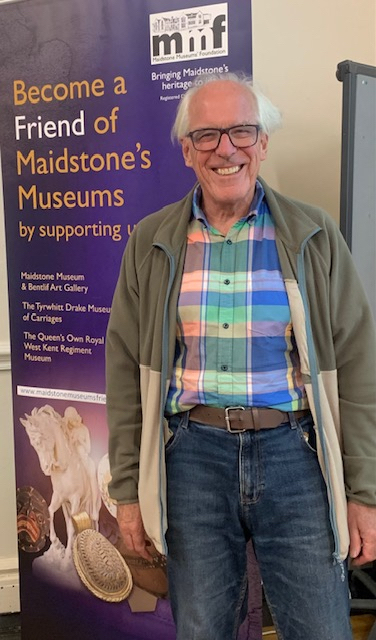
On 1st October, our MMF Member Mike Powis took centre stage to a full house. Mike offered a unique perspective on the Channel Tunnel project through his involvement of over thirty years as a Senior Officer within Kent County Council.
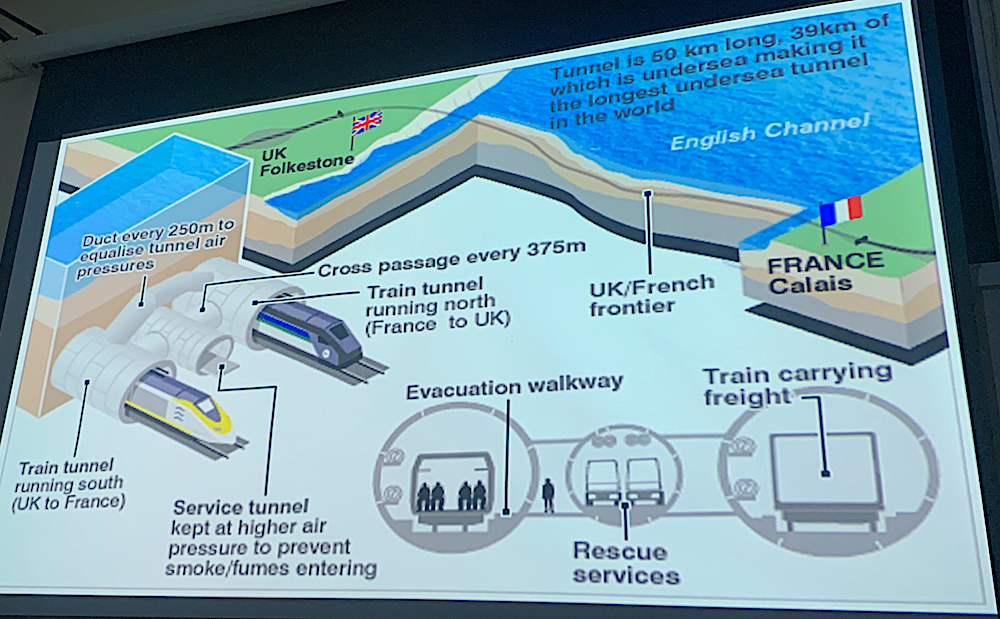
In a presentation drawing on both historical research and personal experience, Mike traced the long road from the earliest tunnel proposals to the opening of the Channel Tunnel in 1994. The Channel Tunnel is far more than a remarkable engineering project. Its story spans centuries of ambition, innovation, political debate and international co-operation.
Ideas for a fixed link between Britain and France date back to the early 1800s, when French engineer Albert Mathieu-Favier proposed a tunnel lit by gas lamps and travelled by horse-drawn carriages. Throughout the 19th century, engineers refined the concept, but technological limitations, financial challenges and especially British military concerns repeatedly prevented construction.
Advances in tunnelling technology and growing cross-Channel traffic kept the vision alive. By the 1960s, studies had produced a design remarkably similar to the tunnel that was eventually built, but political changes including a string of Prime Ministers including Harold Macmillan, Ted Heath, Harold Wilson (two terms), economic crises and disagreements over funding all led to repeated delays and cancellations.
The modern project finally gained momentum in the 1980s under the leadership of Prime Minister Margaret Thatcher and French President François Mitterrand. After competing proposals for bridges and drive-through tunnels were assessed, the rail-based scheme advised by engineering experts emerged as the preferred option. On 12th February 1985 the Treaty was signed in Canterbury Cathedral.
Construction began in 1988, using advanced tunnel-boring machines to excavate three tunnels beneath the English Channel. A big issue in Kent was ‘what to do about the dirt?’ Tunnel-boring had produced 30 miles worth of chalk. An old colliery platform under Shakespeare Cliff was expanded with most of this to become the Samphire Hoe Nature Reserves.
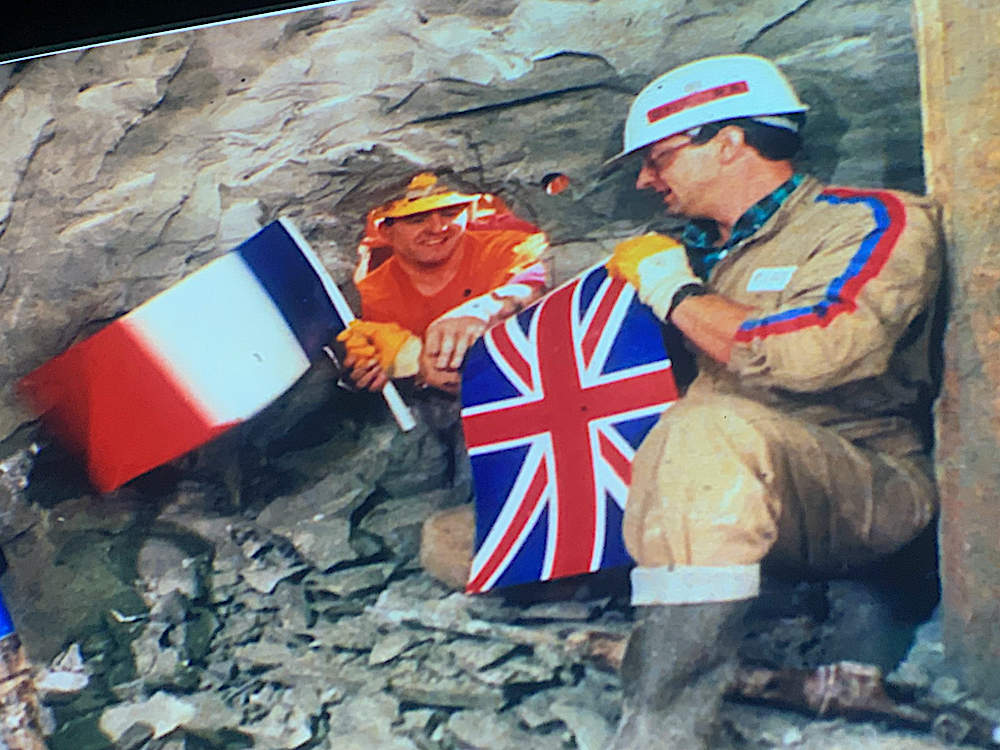
In December 1990, British and French engineers achieved the historic breakthrough when the service tunnel sections met beneath the seabed, differing by just 50 centimetres in alignment.
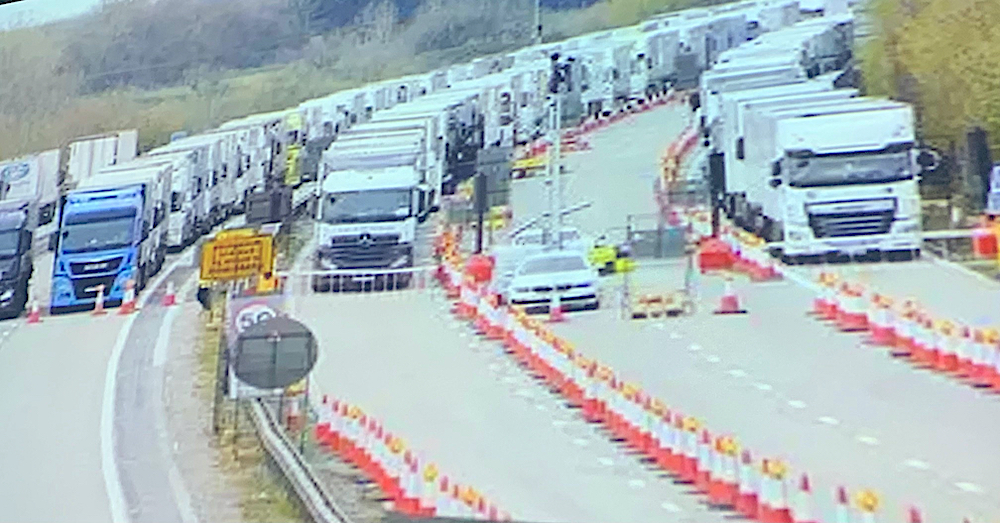
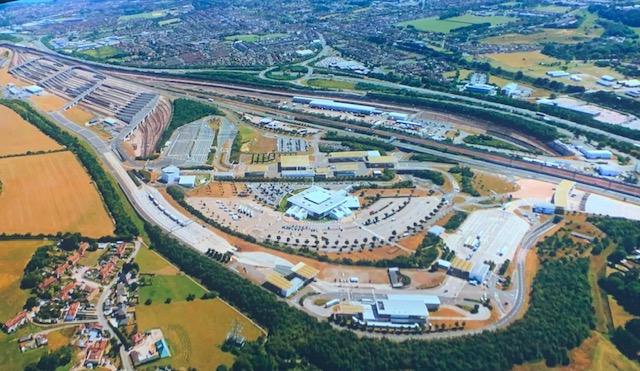
Mike described negotiations over planning controls, transport infrastructure, environmental safeguards and contingency arrangements for traffic disruption. The UK government agreed to various requests by Kent County Council including an international train station at Ashford and funding Kent road improvements, the overall control of Kent Police collaborating with French Police at the Folkestone terminal. The House of Lords instructed the government to set up a lorry park for the times when there is a broken-down vehicle or accident on the M20 motorway, or the Channel Tunnel is closed. Although agreed to by central governments, it has not materialised. Instead, Kent has had ‘Operation Stack and now ‘Operation Brock’ closing a large section of the M20 motorway and creating traffic jams and major disruption in the County.
Officially opened by Queen Elizabeth II and President Mitterrand on 6 May 1994, the Channel Tunnel rail link transformed travel between Britain and continental Europe.
Freight shuttles were the first to start operating with lorries in caged wagons and drivers in a separate ‘café’ carriage. These were quickly followed by long distance through freight trains. In November 1994 Eurostar passenger trains began operating. In the autumn of 1994, pilot car shuttles began and in April 1995 the full ‘Le Shuttle’ service began for car traffic.
Although the project suffered significant cost overruns (going 80% over budget), and operational difficulties, it has become a critical transport link, carrying passengers and freight, reducing reliance on air and sea crossings. Sadly, the enormous potential of the Tunnel for large numbers of through freight trains has not been achieved, with train numbers down to single figures per week.
Despite ongoing debates about its economic performance, the tunnel stands as one of the most significant engineering achievements of the modern era.
Undoubtedly, the Channel Tunnel remains a symbol of international co-operation, technical ingenuity and persistence, connecting Britain and continental Europe through a vision that took nearly two centuries to become reality.
With our thanks to our MMF Member and speaker Mike Powis for his informative talk and personal and professional insights into the history of the Channel Tunnel.